
If you’ve typed “best asado negro near me” into your phone at nine at night with an empty stomach, you already know the feeling. This is not a dish you casually crave. Asado negro pulls at something deeper, usually memory, sometimes homesickness, and always hunger for that dark, glossy, almost caramelized beef that Venezuelan grandmothers have been perfecting for generations. It’s rich, it’s sweet in the way panela and Worcestershire sauce sweeten a broth, and it’s deeply savory in a way that coats the whole plate in flavor.
This guide is for anyone searching for the best asado negro near me and wondering how to actually find a spot worth their appetite. We’ll talk about what makes this dish so distinctive, how to sniff out authenticity before you even take a bite, what side dishes should be sitting next to it, and how to navigate the difference between a home cook’s version and a restaurant’s take. By the end, you’ll know exactly what to look for the next time that craving hits.
What Makes Asado Negro So Special
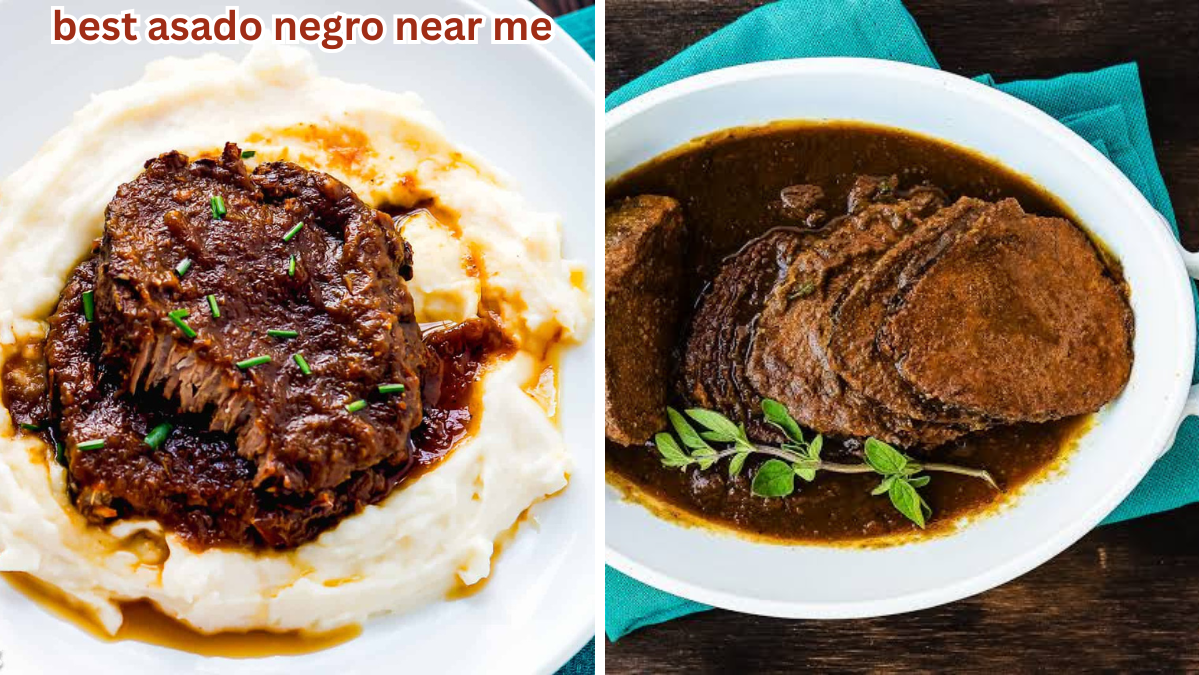
Asado negro isn’t just “beef stew” dressed up with a fancy name, even though that’s how it sometimes gets described on menus written for people unfamiliar with Venezuelan cuisine. The dish starts with a cut of beef, often eye round or a similarly lean, dense cut, that gets seared hard until the outside develops a deep, almost burnt-looking crust. That crust is not a mistake. It’s the entire soul of the dish. The sugar from the panela caramelizes against the meat, and that caramelization is what gives asado negro its signature near-black color and its bittersweet backbone.
From there, the beef braises low and slow in a mixture that typically includes onions, garlic, bell peppers, tomato, bay leaf, and a generous splash of Worcestershire sauce alongside the sweetened, browned sugar base. The braising liquid reduces into a glossy, dark sauce that clings to every slice of meat. When it’s done right, the beef falls apart with barely any resistance from a fork, and the sauce underneath tastes like something between a demi-glace and a mole, savory, faintly sweet, and layered with slow-cooked depth. This is why anyone hunting for the best asado negro near me should understand that they’re not just looking for “beef in sauce.” They’re looking for a technique that takes patience and respect for the process.
Searching for the Best Asado Negro Near Me: Where to Start
When you’re trying to find the best asado negro near me, the obvious first move is a search engine, but don’t stop there. Venezuelan restaurants, especially smaller family-run spots, don’t always have polished websites or aggressive marketing budgets. Some of the best plates come from places with a handwritten sign and a menu that hasn’t changed in years because why would it, the food already works. So while a quick search will get you a starting list, cross-checking with local Venezuelan community groups on social media often reveals hidden gems that don’t show up on the first page of results.
Another smart move is checking review platforms specifically for comments that mention asado negro by name, rather than general praise for “the food” or “the service.” Reviewers who specifically call out asado negro tend to be people who know the dish well enough to judge it against their own family recipe or against other restaurants they’ve tried. Pay attention to comments describing the sauce as rich or the beef as tender rather than tough or dry, since those two textures are the clearest giveaway of whether a kitchen actually took the time to braise the meat properly. If you notice a pattern of people saying a place reminds them of their mother’s or grandmother’s cooking, that’s about as strong an endorsement as you’ll find for the best asado negro near me in your area.
The Telltale Signs of an Authentic Asado Negro
Once you’ve found a candidate restaurant, there are a handful of visual and textural cues that separate an authentic asado negro from a watered-down imitation. The color is the first thing to check. Authentic asado negro should look genuinely dark, almost a deep mahogany or near-black shade, not just brown like a typical pot roast. That color comes from real caramelization of panela or brown sugar against seared meat, not from a shortcut using dark soy sauce or bottled gravy, which some kitchens use to fake the appearance without putting in the actual work.
Texture matters just as much as color. The beef should be fork-tender, practically falling apart on its own, with none of the stringy toughness you’d get from undercooked or rushed braising. The sauce itself should be thick enough to coat a spoon without being gluey or overly starchy, and it should taste layered rather than one-note sweet or one-note salty. If you take a bite and the first flavor you notice is straightforward sweetness with nothing savory chasing it, that’s usually a sign the kitchen leaned too hard on sugar and skipped the long, slow braise that builds real complexity. These small details are exactly what separate a forgettable plate from a truly memorable one that people keep coming back for.
Traditional Sides That Complete the Experience
No plate of asado negro stands alone, and honestly, judging a restaurant’s version in isolation without looking at the sides is only half the job. White rice is the classic companion, and it plays an important role beyond just filling the plate. The rice is there to soak up that dark, glossy sauce, so it should be fluffy and separate rather than clumpy, giving the sauce room to spread and get absorbed properly. A restaurant that skimps on rice quality is often skimping elsewhere too.
Alongside the rice, you’ll frequently find tajadas, which are sweet plantain slices fried until golden and slightly caramelized on the edges. The natural sweetness of the plantains works in conversation with the bittersweet depth of the asado negro sauce, creating a balance that’s central to how the dish is traditionally enjoyed. Black beans, caraotas negras, often round out the plate as well, adding an earthy, slightly smoky note that contrasts nicely with the richness of the beef. When you’re evaluating a Venezuelan restaurant, take a moment to notice whether these sides are treated as an afterthought or as genuine components of a well-composed meal. The care put into the sides usually mirrors the care put into the main dish itself.
Home-Cooked vs Restaurant Asado Negro
There’s an ongoing, friendly debate in Venezuelan households about whether restaurant asado negro can ever truly match what comes out of a home kitchen, and it’s worth understanding both sides before you settle on your personal favorite spot. Home cooks tend to have the advantage of time. Braising asado negro properly takes hours, and a home cook making a big pot for a family gathering isn’t racing against a dinner rush or trying to plate dozens of orders in a single evening. That leisurely pace often produces a more deeply developed sauce and meat that’s had every possible chance to become tender.
Restaurants, on the other hand, bring consistency and often a wider range of seasoning influences picked up from years of feeding a diverse clientele. A good restaurant kitchen that specializes in Venezuelan food has usually made asado negro so many times that the recipe has been refined into something remarkably reliable, plate after plate. The trade-off is that some restaurants, especially ones trying to serve high volume, may cut corners on braising time or use shortcuts that home cooks would never accept. This is exactly why word of mouth matters so much when you’re searching for the best asado negro near me. A restaurant that’s been recommended repeatedly by people with genuine ties to Venezuelan cooking is usually a restaurant that hasn’t compromised on the slow, careful process the dish demands.
Tips for Ordering Like a Regular
If you want to eat like someone who actually knows the dish rather than a curious newcomer, there are a few small habits worth adopting. First, don’t be shy about asking your server how long the beef is braised or what cut they use. Staff at restaurants that take pride in their asado negro will usually answer enthusiastically and in detail, while staff at places cutting corners tend to give vague or hesitant answers. This simple question can tell you a lot before your food even arrives.
Second, order the dish alongside a drink that can stand up to its richness, whether that’s a chilled malta, a light beer, or even just water with lime, since the sauce is intense enough that you’ll want something to cleanse the palate between bites. Third, if the restaurant offers a side of extra sauce or bread to mop up what’s left on your plate, take it. The sauce is often the best part, and leaving it behind is genuinely a waste. Following these small habits will make your search for the best asado negro near me feel less like a guessing game and more like an informed hunt for a specific, well-understood standard of quality.
Why Location and Community Matter When Hunting Down Great Asado Negro
It’s worth acknowledging that great asado negro will always be easier or harder to find depending on where you actually live. Neighborhoods with a strong, established Venezuelan community tend to have more competition among restaurants and home-style eateries, which naturally pushes quality upward as places try to earn loyalty from customers who know exactly what the dish should taste like. In areas with fewer Venezuelan restaurants, you might have to travel a little further or rely more heavily on community recommendations rather than casual search results.
Don’t underestimate the value of asking people directly, whether that’s coworkers, neighbors, or members of local cultural associations and community centers. Venezuelan communities tend to be tight-knit, and recommendations passed along through personal networks are often far more reliable than anonymous online reviews. A dish this rooted in tradition and family history is best discovered the same way it’s always been shared, through word of mouth from people who genuinely care about getting it right. That kind of grassroots discovery is often how people finally land on the best asado negro near me, the spot they end up returning to again and again.
Frequently Asked Questions
What exactly is asado negro made of? Asado negro is traditionally made from a lean cut of beef that’s seared until deeply browned, then braised slowly in a mixture of caramelized panela or brown sugar, onions, garlic, bell peppers, tomato, and Worcestershire sauce. The long braise creates a dark, glossy sauce and tender, fork-friendly meat.
Why is asado negro so dark in color? The dark color comes from caramelizing sugar directly onto the seared beef before braising. This caramelization, combined with a long simmer in a reduced sauce, produces the near-black appearance that gives the dish its name.
Is asado negro very sweet? It has a noticeable sweetness from the caramelized panela, but that sweetness is balanced by savory elements like Worcestershire sauce, garlic, and slow-braised beef drippings. A well-made version should never taste one-dimensionally sweet.
What sides typically come with asado negro? White rice, fried sweet plantains known as tajadas, and black beans are the most common accompaniments. These sides help balance the richness of the dish and are considered essential parts of the traditional plate rather than optional extras.
How can I tell if a restaurant’s asado negro is authentic? Look for a genuinely dark, almost mahogany color, fork-tender beef that falls apart easily, and a sauce with layered sweet and savory notes rather than flat sweetness. Reviews that specifically mention the dish, rather than general praise for the restaurant, are also a strong signal of authenticity.
Read also Best Api Con Pastel Near Me: A Local’s Honest Guide